All You Need To Know About Sapphire Treatments
Sapphires are formed by complex geological processes that take place over millions of years. Imperfections often occur during this process: uneven color distribution, weak color, unsightly inclusions, and similar imperfections. Only a few sapphires are naturally of such high quality that they can be used directly as jewelry and for investment purposes without any treatment. Therefore, there are methods that attempt to remove these imperfections or complete nature's process so that the stones are as perfect as possible. However, not all treatments are the same. The type of treatment has very different effects on the stone and its value. Only heat treatment is recognized by the market.
Heat Treatment
Heat treatment is standard practice. An estimated 95% of all sapphires are heat treated. As these sapphires make up the majority of the market, the price is based on them. For untreated sapphires, however, you pay a significant premium, which can easily reach double or more than the price of a heat-treated stone.
During heat treatment, the stone is exposed to temperatures between 800 and 1800 degrees Celsius for several hours to days, depending on the desired effect. This is a so-called natural treatment, as it mimics the geological process to completion. During their formation deep within the earth, the stones are also exposed to high temperatures, which can trigger similar processes in the stone.
Effects:
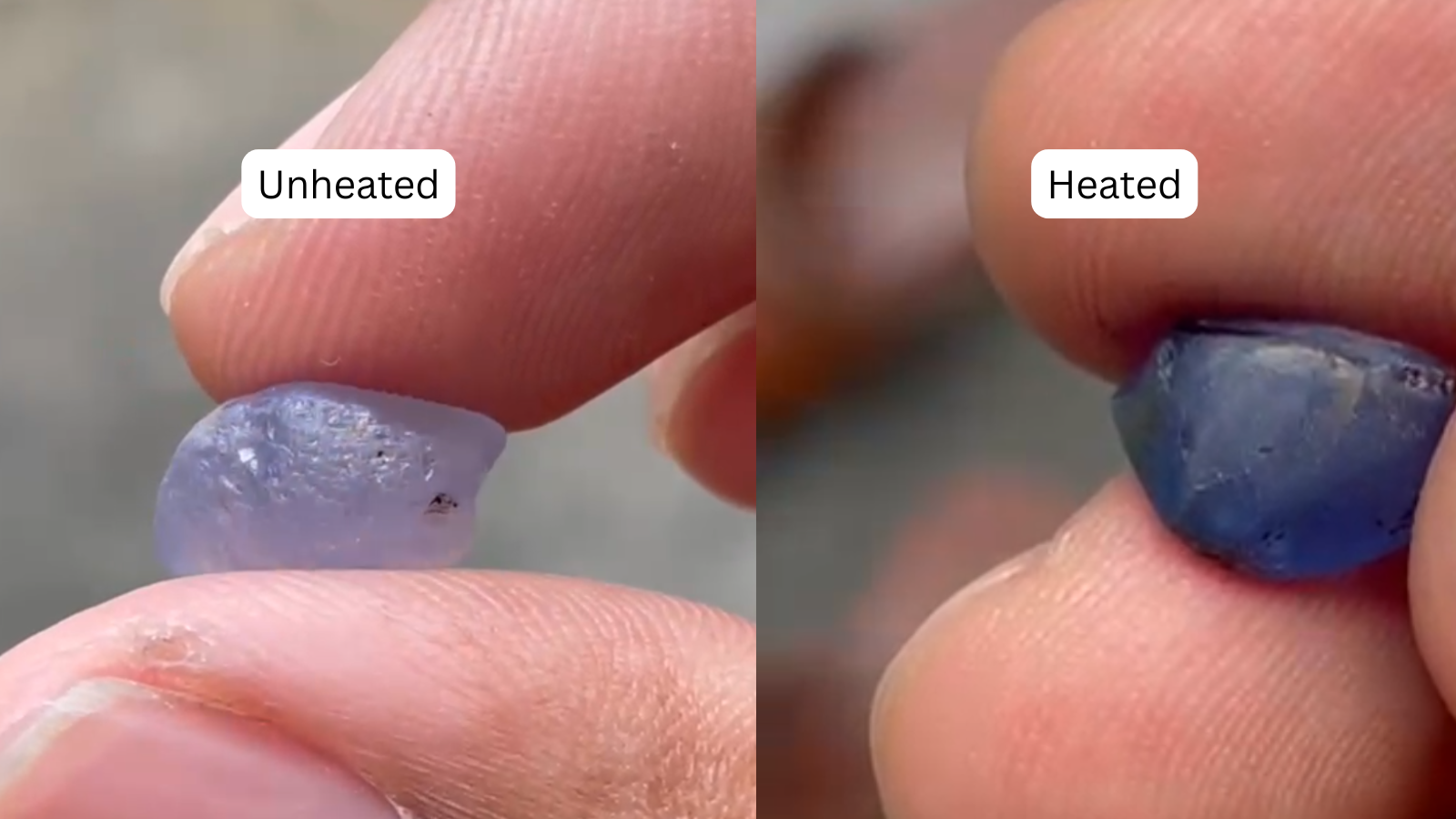
Clarity is improved as the rutile needles, which can occur as inclusions in sapphires, dissolve. The color can change completely due to chemical reactions, sometimes from milky white to a brilliant blue.
These effects are permanent. The condition of the stone does not change any further. There are no other negative changes either; the stones are just as stable as untreated sapphires.
Diffusion Treatment
During the diffusion, foreign elements in the form of powders are added during heating, which change the color of the stone. These elements then diffuse into the crystal structure of the sapphire, changing its structure and color.
Effects:
The color is intensified or changed, e.g., to a vivid orange, especially when beryllium is used. This is due to the fact that the color and durability depend on the elements used.
Depending on the element, this color layer does not extend through the entire stone, but is only very shallow beneath the surface. If the stone were to be recut, the color would be lost again and is not permanent.
The value of the sapphire decreases enormously and is less than half that of a normally heat-treated stone. Such stones can be beautiful, but they are not of high value.
Filled Sapphires
The goal of treatments is not only clarity or color. Natural stones can also have cracks that affect their aesthetics and stability. Therefore, various methods are used to fill these cracks.
During heating, various substances are added, which then soak into the cracks in the sapphire. This is usually a mixture of glass or quartz, or in some cases lead-containing glass.
Effects:
The sapphires become significantly more unstable, as the filling substances can be very sensitive. In some cases, even mild substances such as lemon juice can attack and damage the filling substances. They can also be heat-sensitive, meaning that these stones are not suitable for goldsmith work.
Depending on the filling used, stones treated in this way have a noticeably lower to almost no value.
Irridation Treatment
Irradiation is another method used to improve color. The stones are usually irradiated with gamma rays, which alter the so-called color centers in the stone.
Effects:
The color is changed, becoming more intense and vivid. Unfortunately, this improvement is often not permanent and can fade when the stone is exposed to light and heat. Therefore, sapphires that have undergone such treatment have a noticeably lower value than heated or even untreated sapphires.
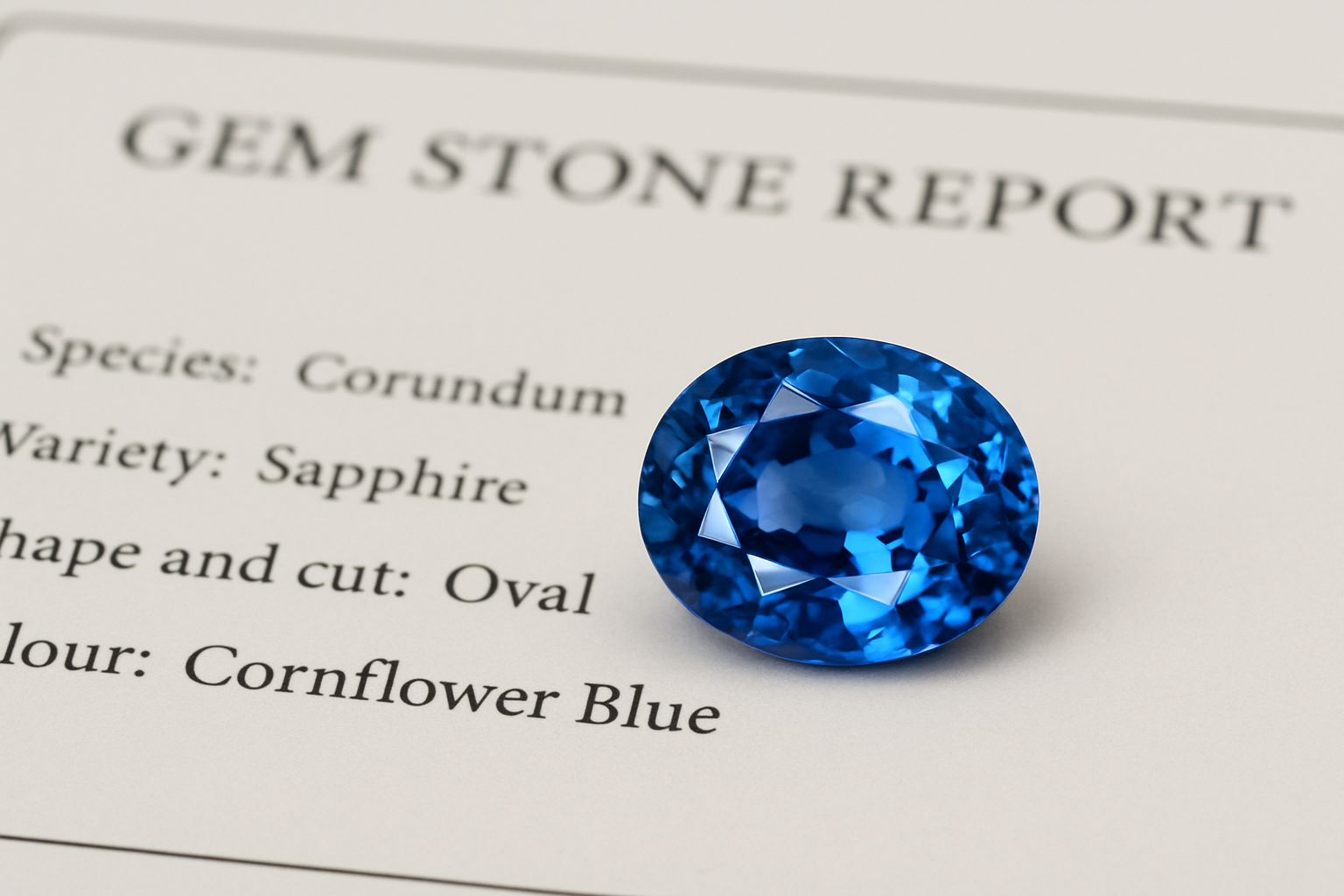
Conclusion: Certificates are absolutely essential
These treatments show that a laboratory certificate is essential for sapphires. They identify treatments or can attest that the stone is natural. They are the basis for transparency and trust.