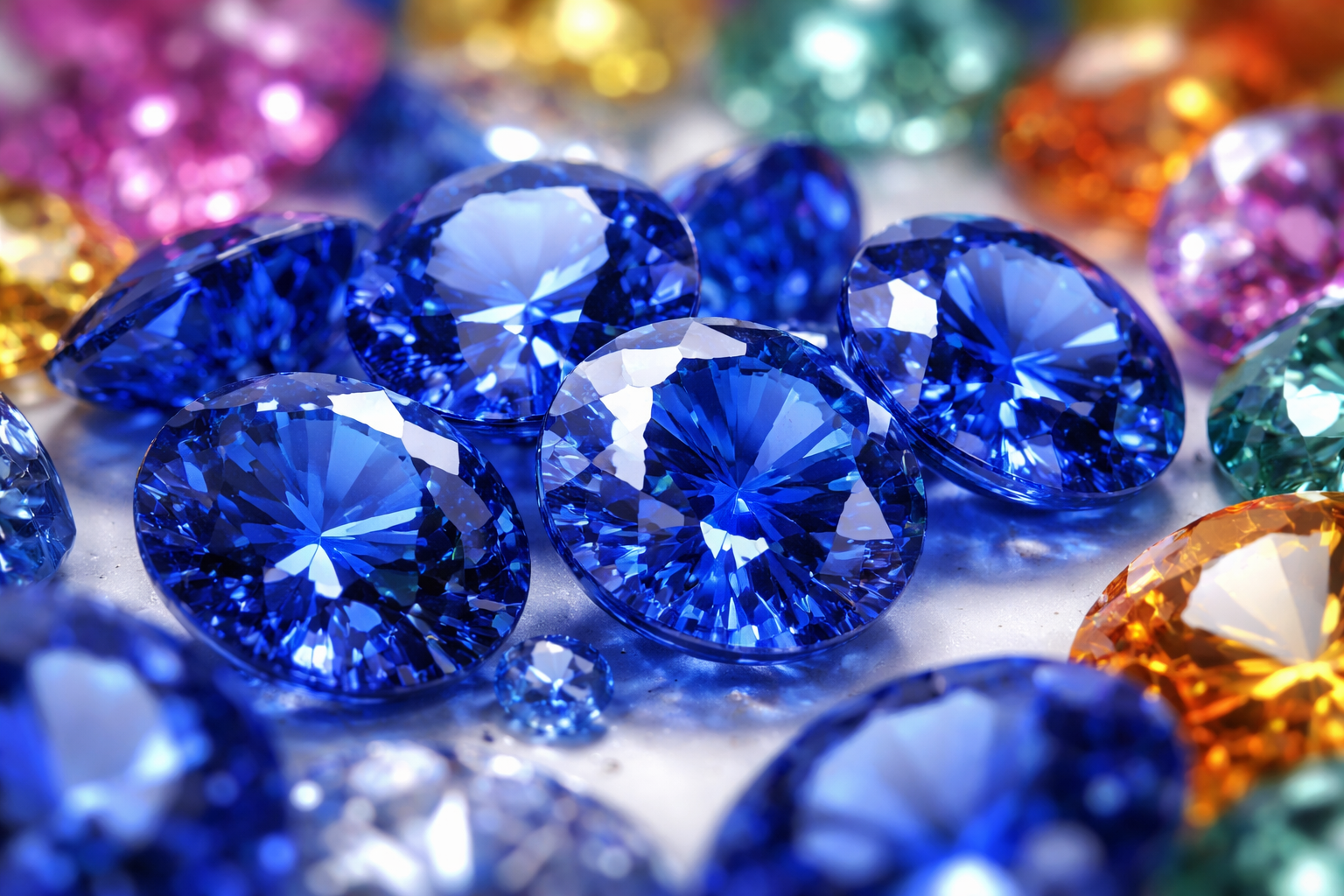
Which Sapphires are Sourced Ethically?
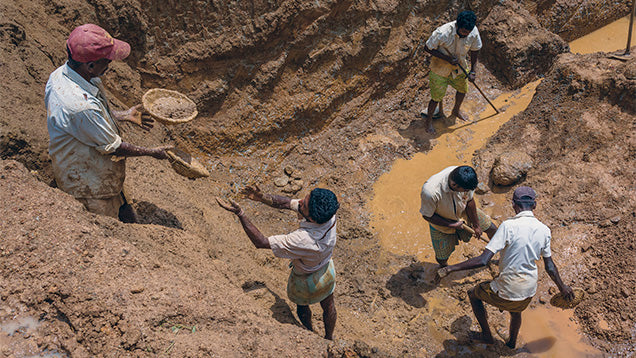
Why is ethical sourcing of sapphires crucial?
Ethical sourcing of sapphires means that the stones are mined and traded under fair, transparent, and responsible conditions. There are four criteria that an ethical sapphire needs to meet:
Traceability, fair working conditions and social responsibility, minimized environmental impact, and conflict-free sourcing.
The focus is on ensuring that local people benefit from mining as well as preserving the land for future generations. In contrast to the large-scale, highly industrialized extraction of diamonds and many other material, sapphires are usually mined on a small scale. As a result, human rights violations are generally less common in this sector and small local companies as well as families at the location can be supported way easier. Nevertheless, there are still critical issues to be addressed, and it is crucial to take a close look and ensure that every stone comes from an ethically acceptable source.
How we guarantee ethical sapphires
Our ambition is to trade in sapphires whose origin we know and can account for. Every single stone is carefully examined. If the origin of a sapphire cannot be clearly traced, it will not be offered. Only if the origin is known and there are no ethical concerns will a stone be considered by us.
To ensure this transparency, we purchase sapphires directly in the countries of origin. We avoid intermediaries and rely on personal contacts on site wherever possible. Ideally, we can visit the mines ourselves and get our own impression of the conditions. The vast majority of our sapphires come from verifiably flawless sources - primarily from Sri Lanka and Australia, where mining is carried out under responsible conditions.
Why are Sri Lankan sapphires ethical?
The sapphire industry in Sri Lanka is characterized by many small family businesses. This prevents the emergence of large, monopoly-like companies that are only interested in their own profits. Sri Lanka has taken various measures to ensure that these small businesses also adhere to ethical standards.
Everything is regulated by a government agency, the National Gem and Jewelry Authority (NGJA). Everything from mining and cutting to export is regulated and controlled.
Strict occupational safety guidelines apply to mining. Child labor is strictly prohibited and severely punished.
Every sapphire is inspected upon export. The export of rough sapphires is heavily regulated. This is to ensure that the added value remains in the country and that a first-class lapidary industry can exist there.
Sri Lanka is known for its high-quality cutting and, thanks to its small business structure, for its ethical working conditions in the cutting industry as well.
Sri Lanka also follows a similar model to Australia when it comes to environmental protection: an environmental deposit. Mine operators only get this money back once nature has been fully restored. This includes, for example, dismantling, filling in the pits, or replacing the topsoil.

In our case: We usually buy sapphires from our contacts, who purchase the rough stones directly from the mines and then cut the sapphires themselves in their own lapidary.
Why are Australian sapphires ethical?
Sapphire mining in Australia is strictly regulated by the respective state governments. Anyone who wants to mine sapphires in Australia needs a license, which can only be obtained by providing extensive documentation, and a lease agreement.
There are strict regulations for occupational safety and inspections during mining. Fair wages must be paid, safe working conditions must prevail, and, of course, any form of exploitation, such as child labor, must be excluded.
There are also several obligations to protect the environment. When a mine is completly sourced and no longer in use, the land must be restored to its original condition. This means not only dismantling the mine, but also restoring the entire ecosystem, e.g. by planting new trees. To achieve this, operators must deposit security deposits, which are refunded after a successful inspection that confirms the recultivation requirements.
In our case: we source Australian sapphires directly from the mine operators. This means we know exactly where they come from, who mined them, and in most cases who cut them. A nice side effect as well: Many sapphires from Australia have a really amazing precision cut. This sets them even more apart from sapphires that are cut in huge cutting factories.
This is also one reason why Australian sapphires can be slightly more expensive. These requirements, processes, and wages increase operating costs, but ensure extremely ethical mining practices with an amazing stone.
Where limits exist
Despite the utmost care, there are cases where a 100% guarantee is not entirely possible. Some sapphires are found exclusively in a specific location. If this site is in a difficult region, no one can confirm with absolute certainty that the entire mining process was ethically sound unless they were completely involved on site themselves.
In these exceptional cases, we work exclusively with trustworthy partners who inform us about the conditions on site. This ensures that the risk of unethical practices remains as low as possible and that we can still source exceptional, rare stones responsibly.
This is also the reason why you almost find no stone from Madagascar in our stock - even though Madgascar is one of the top sapphire supplier worldwide.