This is why Sapphires can be a Suitable Investment
Sapphires are not only among the most beautiful and exquisite gemstones - they are also increasing in value. This makes them perfect not only for beautiful jewelry, but also as a long-term investment. And this has been the case since ancient times, beginning over 2,000 years ago.
Why are sapphires continuing to increase in value?
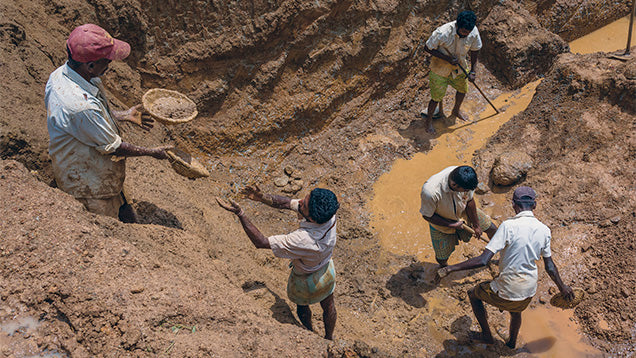
Sapphires are rare gemstones that only form under very specific and rare geological conditions. Supply is therefore naturally very limited. In addition, natural reserves are dwindling, meaning that sapphire mines are producing fewer and fewer deposits. This is particularly true for high-quality sapphires.
One example of this is the Kashmir region, which is almost exhausted - and in some parts already completely.
This rarity largely determines their value. When a mine with high-quality sapphires - such as in Indian Kashmir - dries up, their value rises to unprecedented heights and is comparable to that of a rare historical artifact or an object of art.
This declining supply is meeting with ever-increasing demand. The global gemstone market is undergoing a significant shift from diamonds to colored gemstones, with the so-called “big three” – sapphires, rubies, and emeralds – benefiting in particular. Both jewelry brands and investors are increasingly embracing this change.
In summary: decreasing supply is meeting rising demand. This is leading to an increase in the value of the stones.
Are sapphires a suitable investment asset?
Sapphires can be a very interesting investment opportunity for diversification. Not only do sapphires have robust value development, but they also have a very low correlation to traditional investments and low volatility.
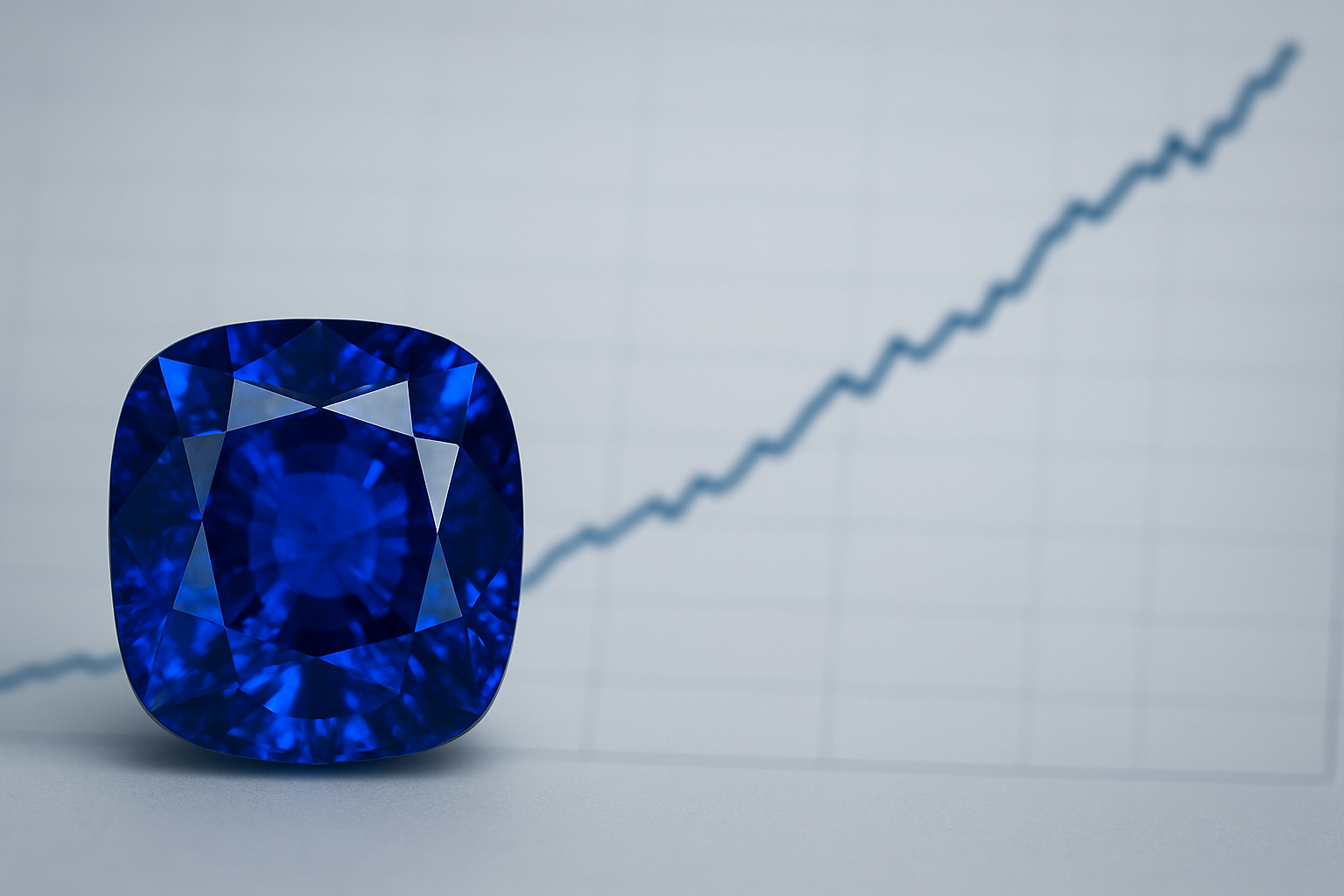
Over the past 20 years, untreated sapphires have increased in value by approximately 3.5 times, which corresponds to about 7% per year. As a result, the increase in value is well above inflation.
Unlike stocks investments, sapphires are not subject to much volatility. Specifically, this means that while stocks, for example, can rapidly lose value during economic crises, this is generally not the case with sapphires. They remain largely stable or even experience growth in such situations as an investment that is perceived by the market as safer.
Experts assume that the demand for colored gemstones such as sapphires will continue to rise. It is estimated that the sapphire market will grow by about twice its current size over the next 10 years (until 2035).
What should you keep in mind?
For sapphires to be a worthwhile investment, they need to be fairly rare and therefore of a certain quality. The value increases with the rarity.
The bigger the stone, the rarer it is. Therefore, the stone should weigh at least 1 carat; the larger it is, the more valuable it is.
A clean stone is a basic requirement. Investment-grade stones are always at least eye-clean. Loupe-clean stones can be a reasonable choice, but they don't necessarily have to be: the cleaner the stone, the more difficult it is to identify it as natural and untreated. Eye-clean is therefore a highly recognized degree of clarity. Both for jewelry and as an investment.
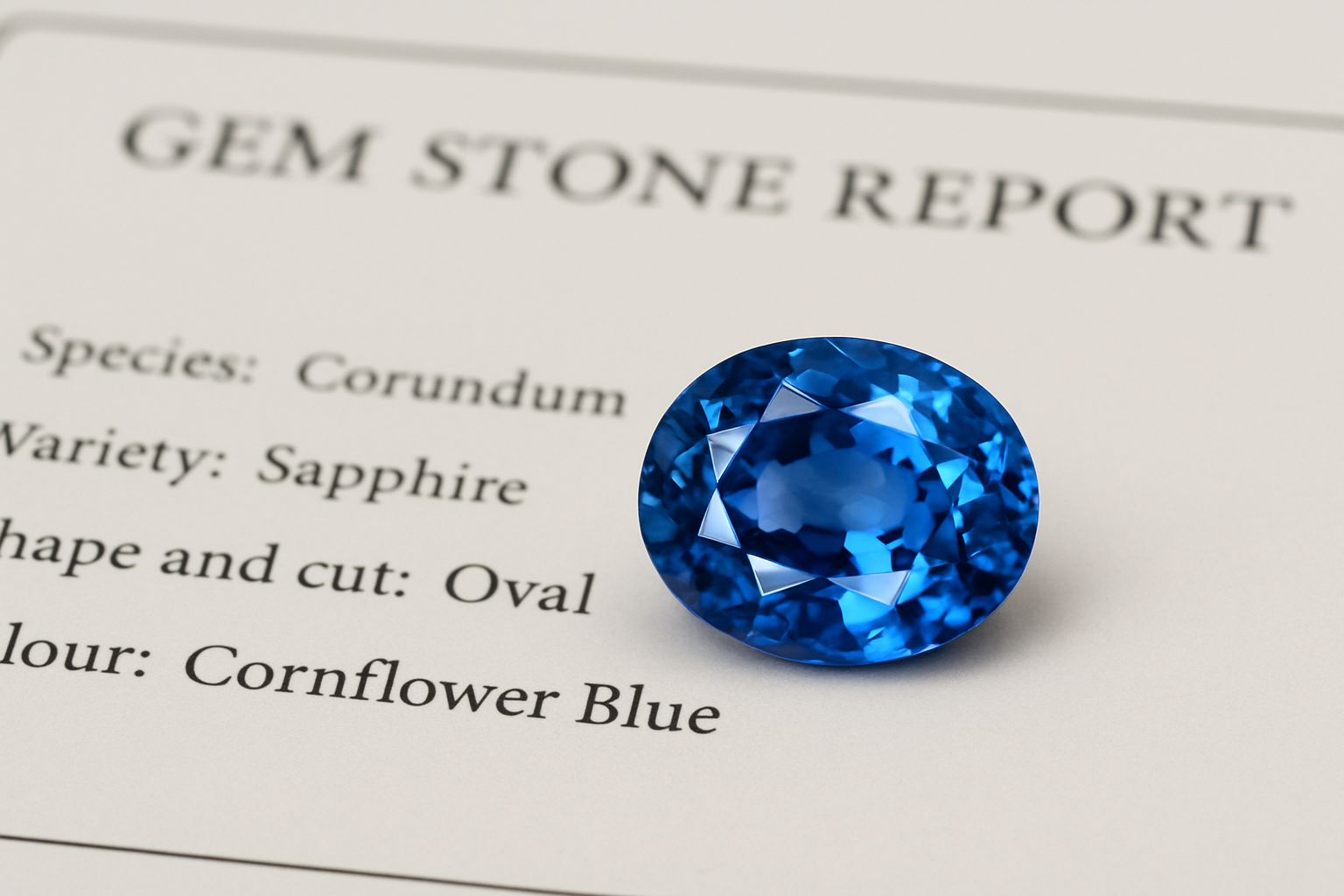
The color should be appealing and vivid. Examples include certified royal blue, cornflower blue, vivid blue, or padparadscha (a mixture of orange and pink).
The origin should also be ethically acceptable. A non-ethical origin can be associated with reputational damage, which can also reduce the value of the stone. To avoid this, the following origins are suitable examples: Sri Lanka, Montana, or Australia.
The sapphire is required to be natural - not a lab-grown sapphire, as lab-grown sapphires are nearly worthless. Naturalness goes hand in hand with rarity. Completely untreated sapphires are therefore the best choice. However, heat-treated sapphires can also be a suitable investment. This treatment is recognized, natural, and is performed on over 95% of sapphires.
Under no circumstances, however, should other treatments have been carried out. Diffusion and irradiation greatly reduce the value of the stone. Such stones are in very little demand, which means that no increase in value can be expected.
These characteristics must be verified with an independent certificate from a trustworthy laboratory. This certificate is the stone's passport and lays the foundation for trust and transparency.