How To Value Sapphires?
Determining the value of a colored gemstone, especially sapphires, is complex and requires expertise and experience. However, there are a few indicators that anyone can look out for and take into account when making a purchase.
Basically, the value can be determined based on six characteristics:
The famous “4Cs,” i.e., color, clarity, cut, and carat weight, as well as origin and treatment methods.
Color
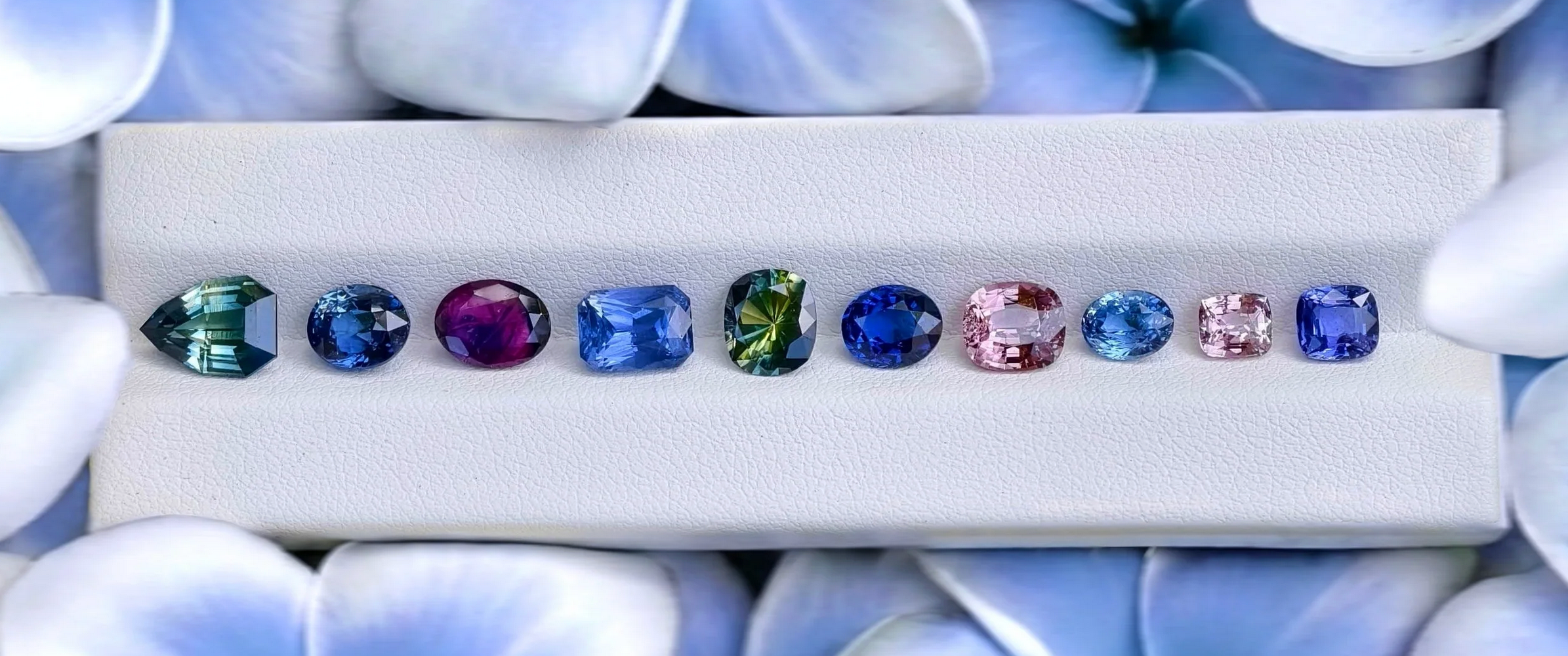
Color is probably the most complex factor. As a general rule, the purer (no distracting undertones), more vivid, and more intense the color, the more valuable the sapphire.
The stone should have a consistent color; multicolored stones should have attractive color zoning.
Fortunately, these are all points that relate to aesthetics - and can therefore be judged by anyone to a certain extent. Certificates with specific color grades from laboratories can provide additional certainty. For example, “royal blue,” “cornflower blue,” or “padparadscha,” which can often achieve the highest prices.
Clarity
Unlike diamonds, the desired degree of purity for colored gemstones is “eye-clean.” This means that the inclusions are not visible to the naked eye. “Loupe-clean” stones are slightly more valuable than eye-clean stones, but this difference is minor.
Inclusions visible to the naked eye can significantly reduce the value of the stone - or have little effect on its value.
It depends on how visible the inclusion is and whether it affects the aesthetics. It also depends on its size and position. A small visible inclusion at the edge of the stone has a far less serious effect than a large visible inclusion in the center of the stone.
Cut
The cut is often a compromise. Rough sapphires are high priced. Therefore, the aim is often not necessarily to achieve the perfect cut (precision cut), but to preserve as much of the rough stone's weight as possible (commercial cut).
This can have negative effects:
So-called windows reduce the value. These are areas where light can shine through because the sapphire has been cut too flat. You can see through the stone, as if there was a transparent spot.
At the same time, the stone should not be too dark, so that the light can no longer reflect the color. This happens when the stone has been cut too deep.
An average or low-quality cut can still often be acceptable if the color is sufficiently impressive.
Outstanding cuts, on the other hand, can justify significant price premiums.
Carat Weight
The larger the stone, the rarer it is. Hence, the price per carat does not increase linearly, but exponentially.
Consider the following example: We have two stones with the same qualities (same color, same clarity, etc.) but with two different weights.
One sapphire weighs 1 carat, the other 3 carats.
Let's assume that the 1-carat sapphire has a value of 1,500€ per carat.
Then the 3-carat sapphire already has a value of 4,000€ per carat, resulting in a total price of 12,000€.
Origin
The origin can also influence the value, especially if this origin produces few or no new sapphires. For example, sapphires from the Kashmir region (few or no new sapphires, depending on the exact location) are significantly more valuable than stones from Madagascar (many new sapphires from this origin).
Treatments
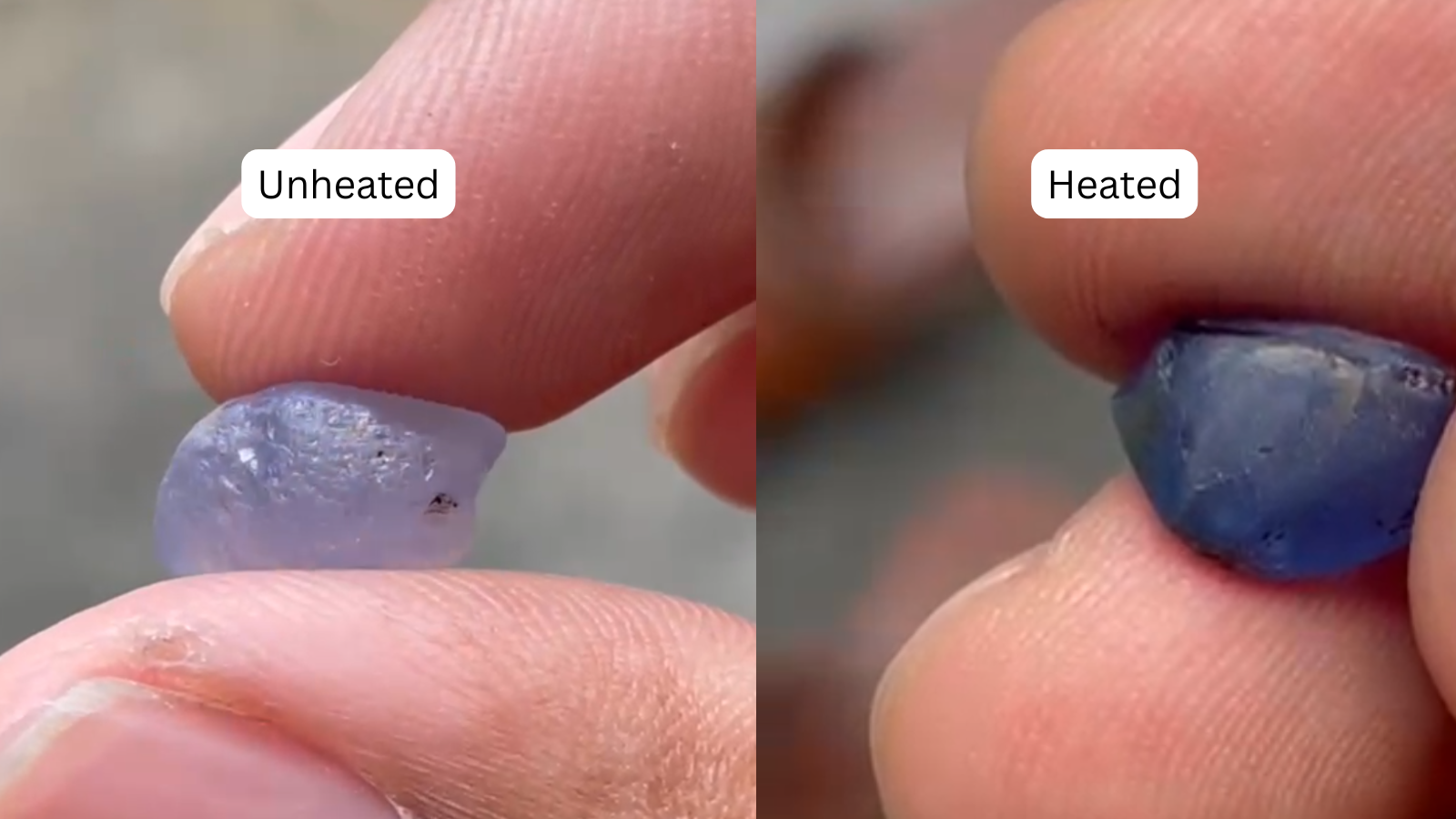
The treatment of the stone can significantly impact the value of the sapphire. More information on this topic can be found in a separate article: All You Need To Know About Sapphire Treatments